ALGONQUIN, IL
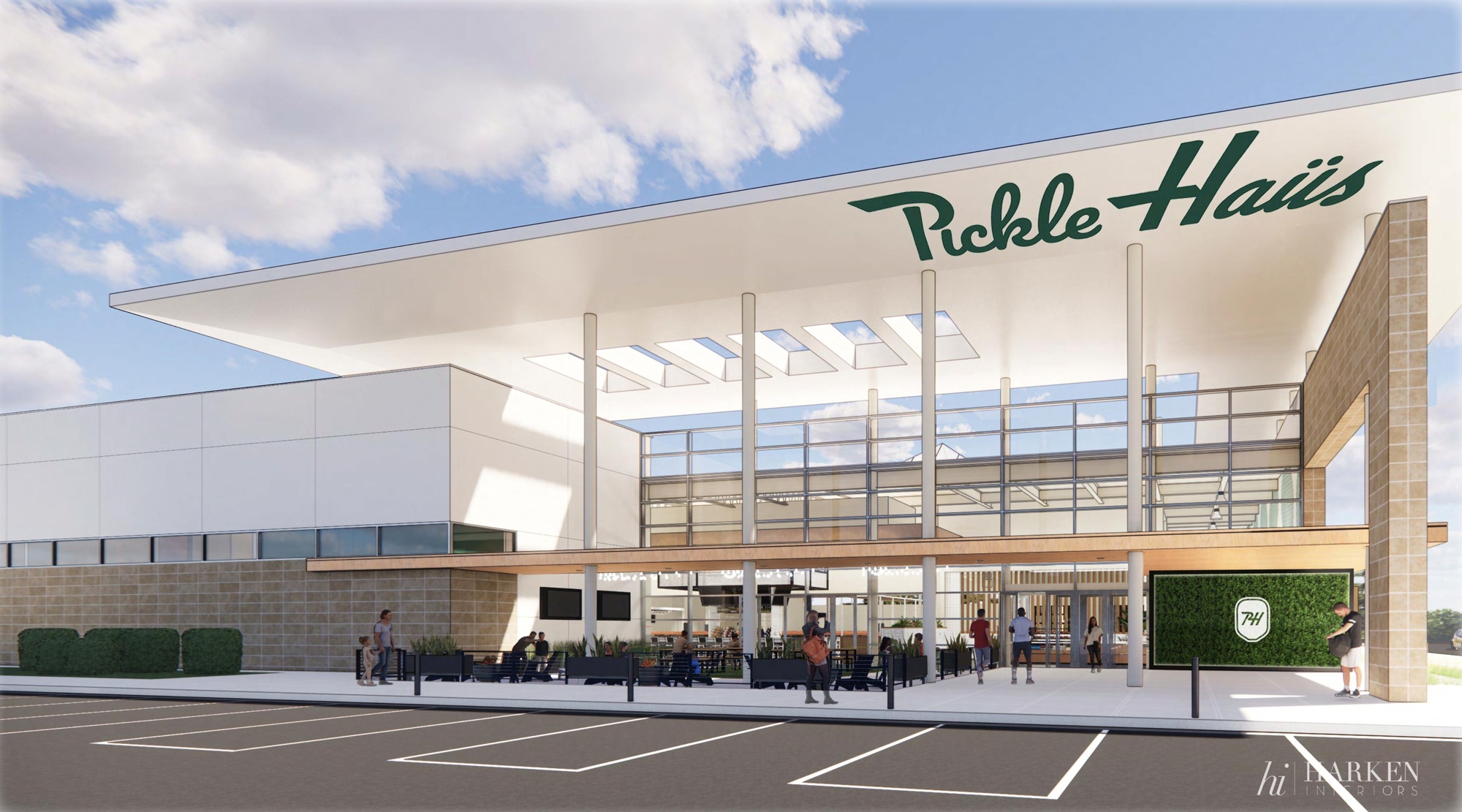
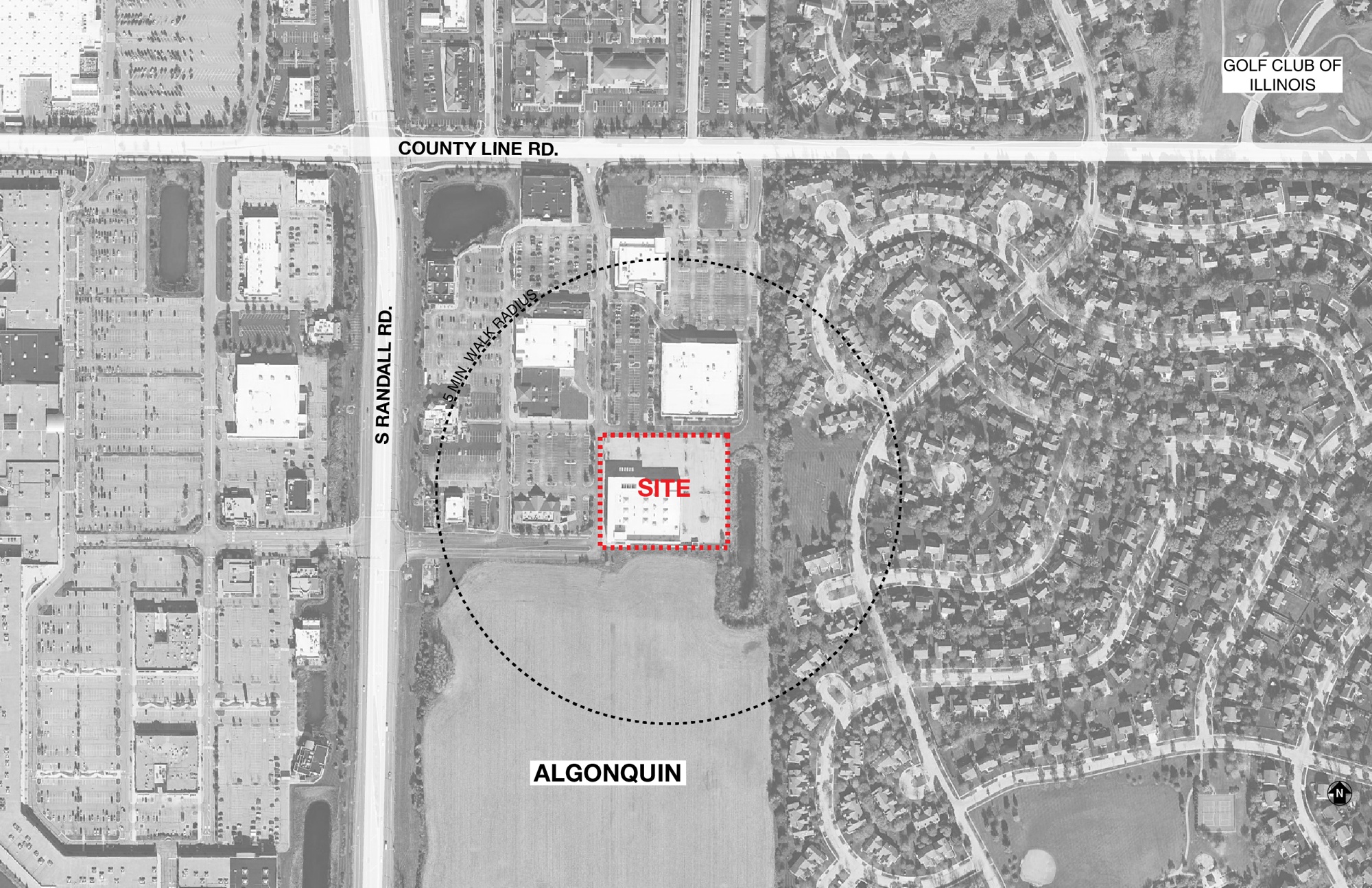
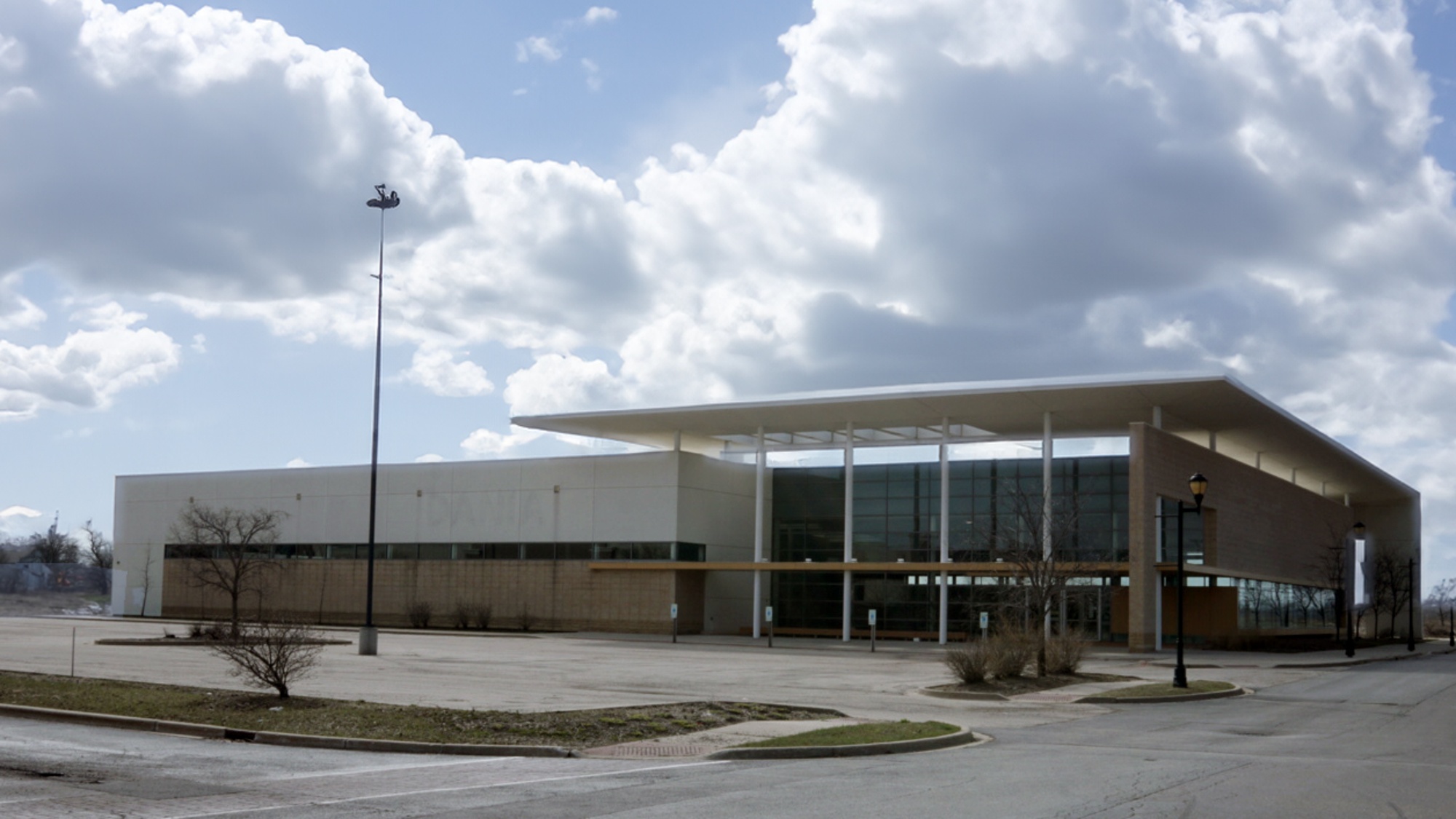
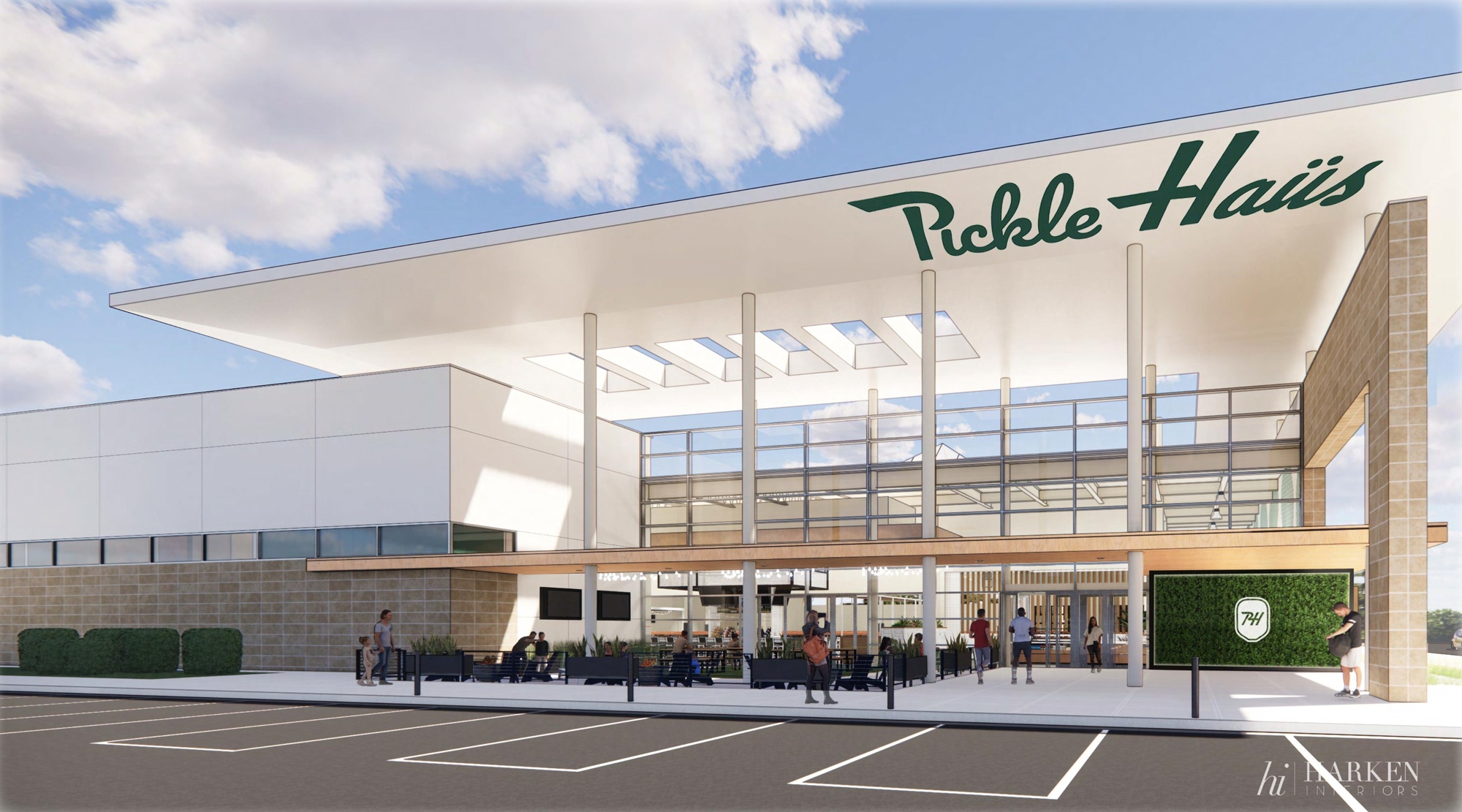
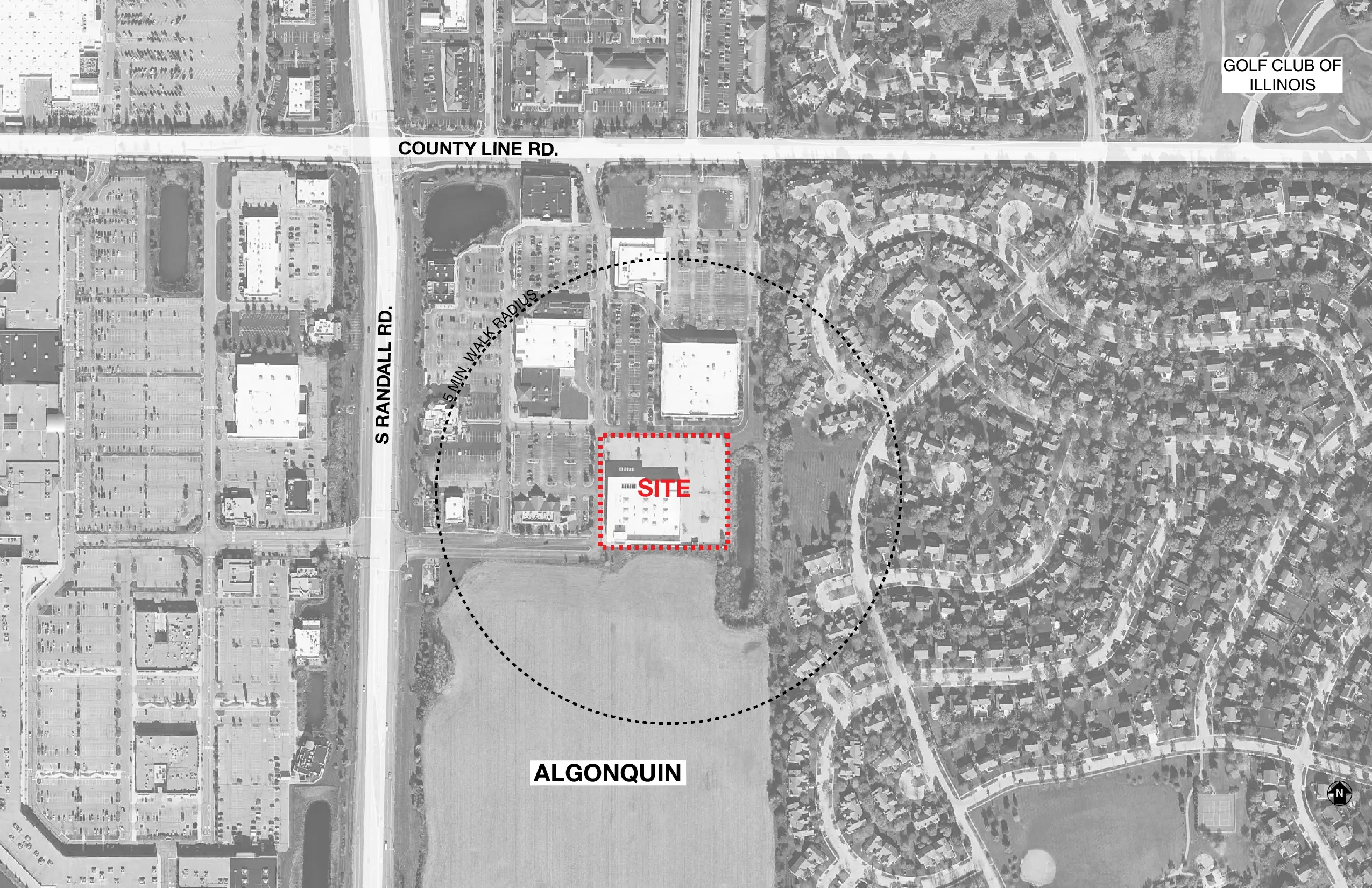
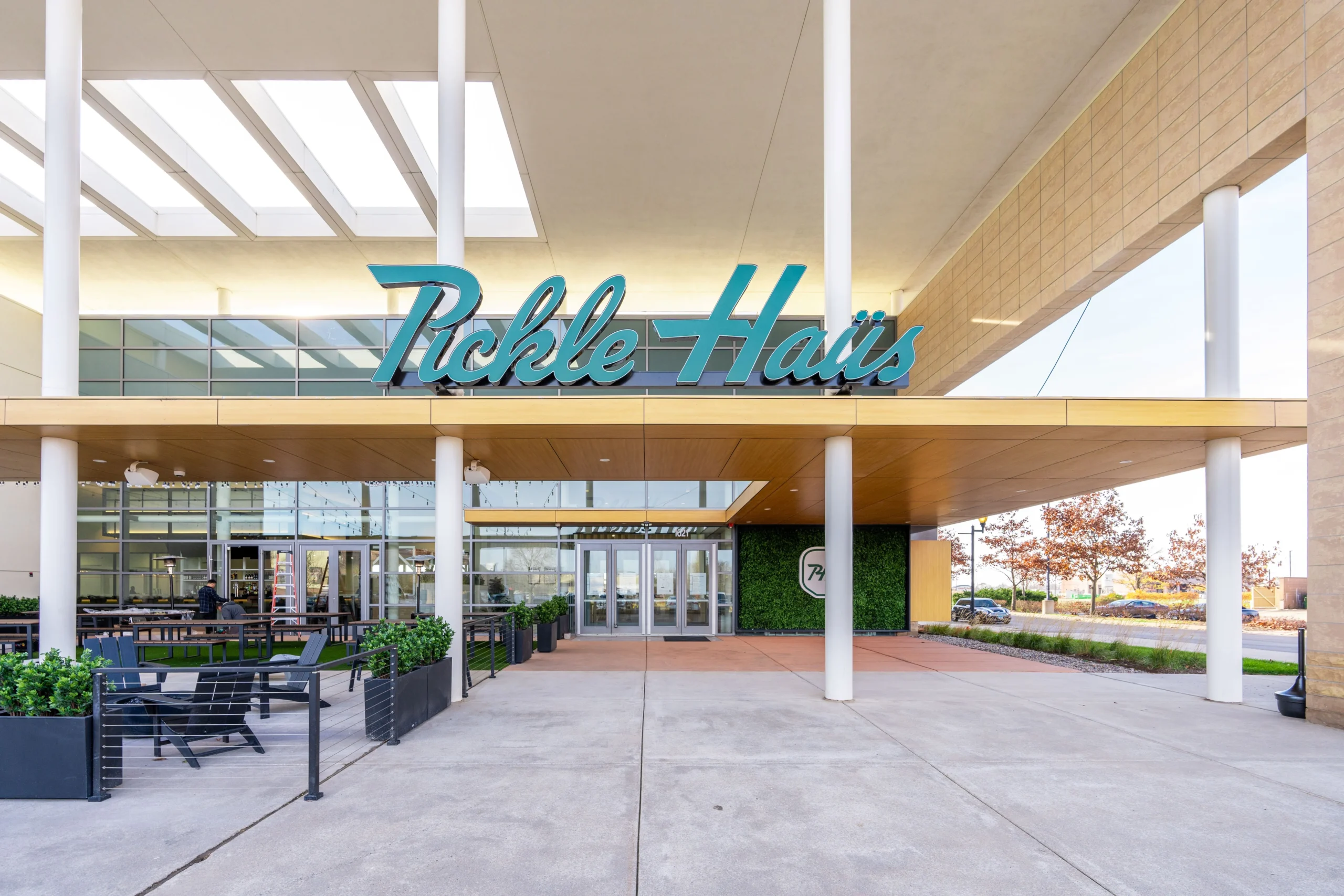
Pickleball has quickly become one of the fastest growing sports in America. Pickle Haus was established to meet the growing need for new courts in the Chicago area. The first Pickle Haus, located in a vacant furniture store in Algonquin, is a pickleball focused entertainment venue providing retail sales, food and beverage options, an event space, golf simulators, and an outdoor plaza. It is also a great example of how to reuse vacant big-box retail buildings which are in abundant supply. As the first Pickle Haus, this design will be used to establish interior design standards, graphics and branding for future facilities. The 48,000sf building was built in 2008 as a Dania furniture store with some unique features not typically seen in big box retail, such as an expansive cantilevered roof floating on thin round columns above the entrance, horizontal projecting windows, and a vertical glass atrium. These elements, and the building’s overall modern aesthetic, were used as a canvas from which to work. The planning and design for the interiors, while needing to meet the programmatic objectives of Pickle Haus, were tailored to the unique features and spaces found in the existing building.
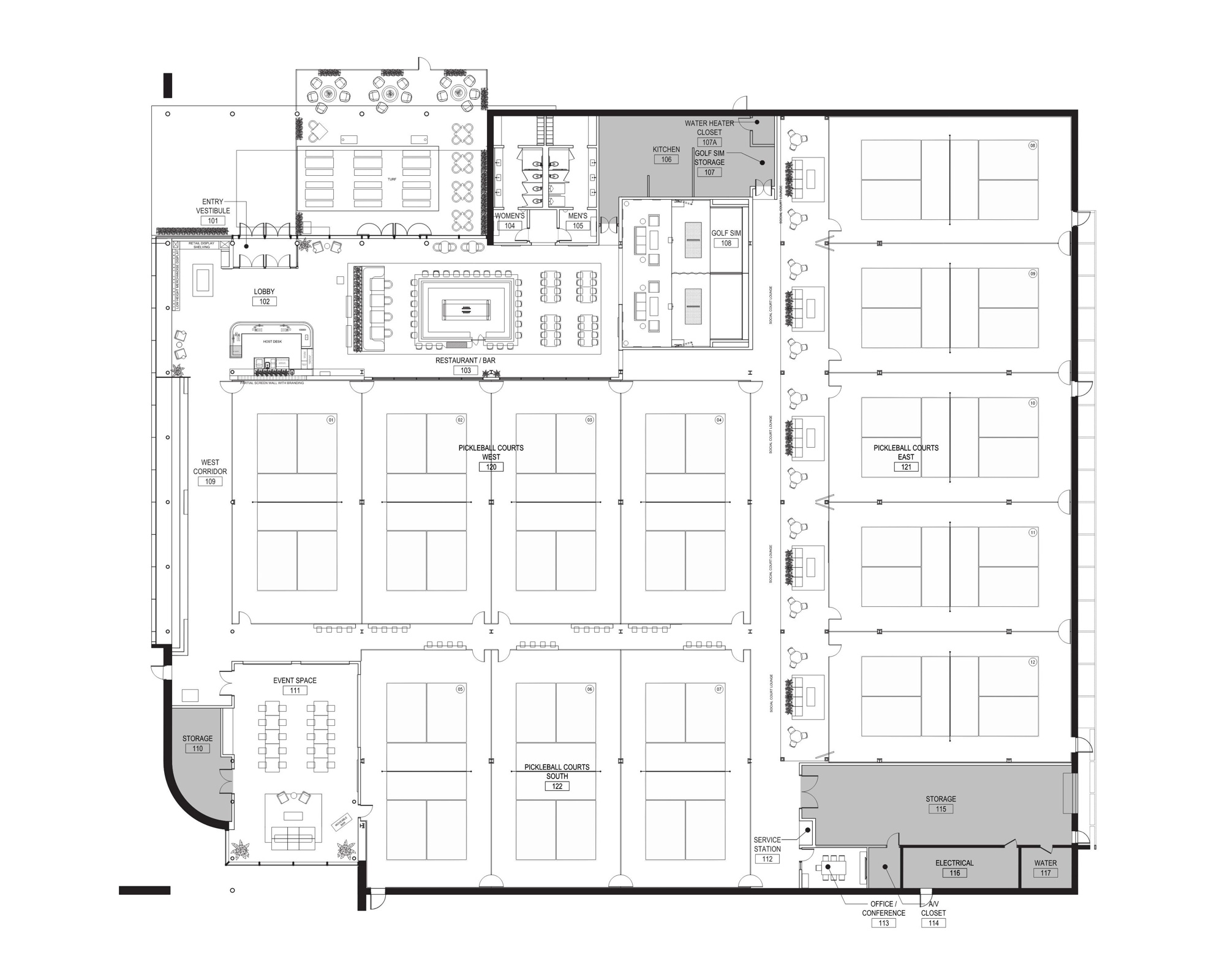
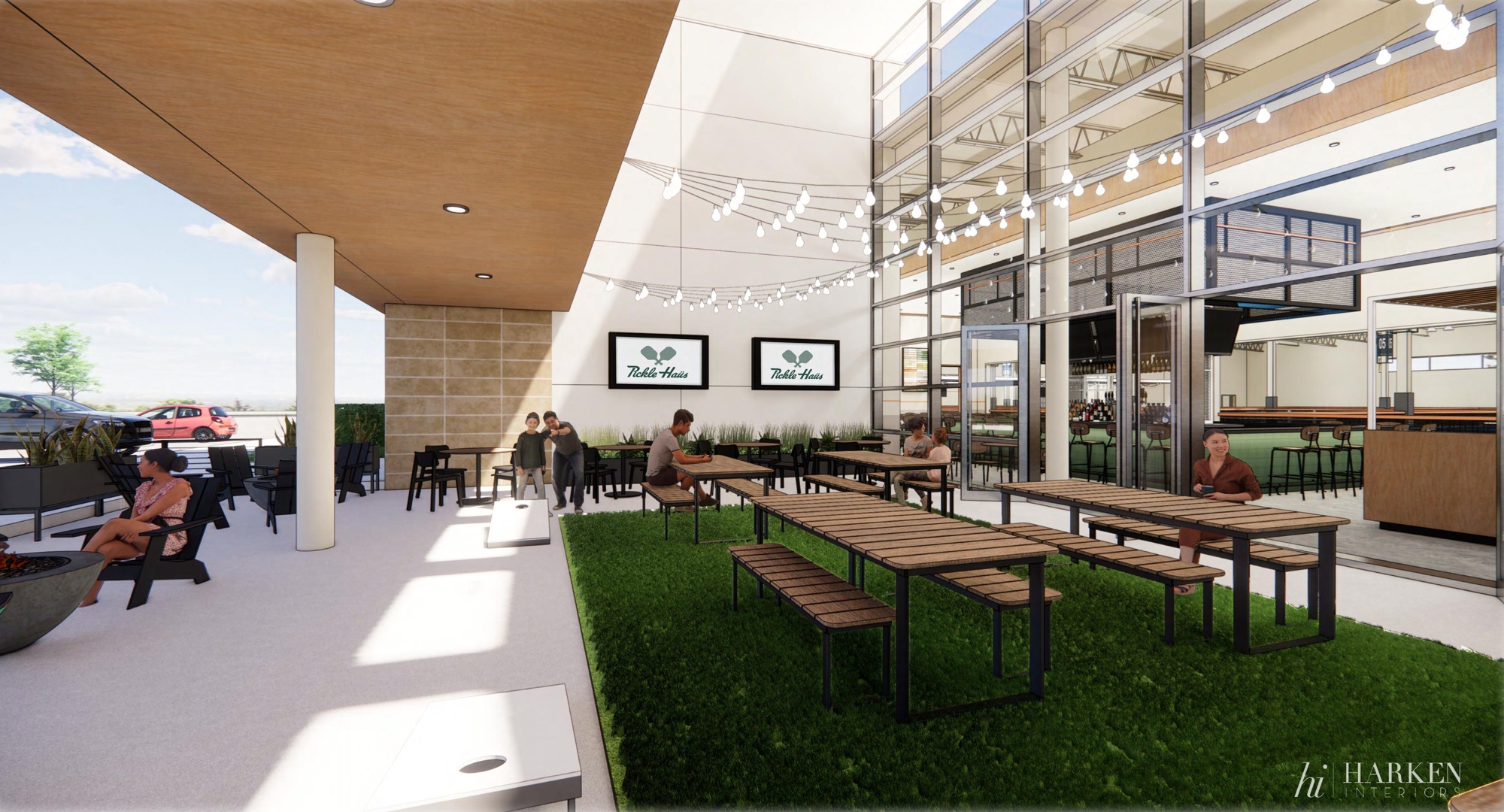
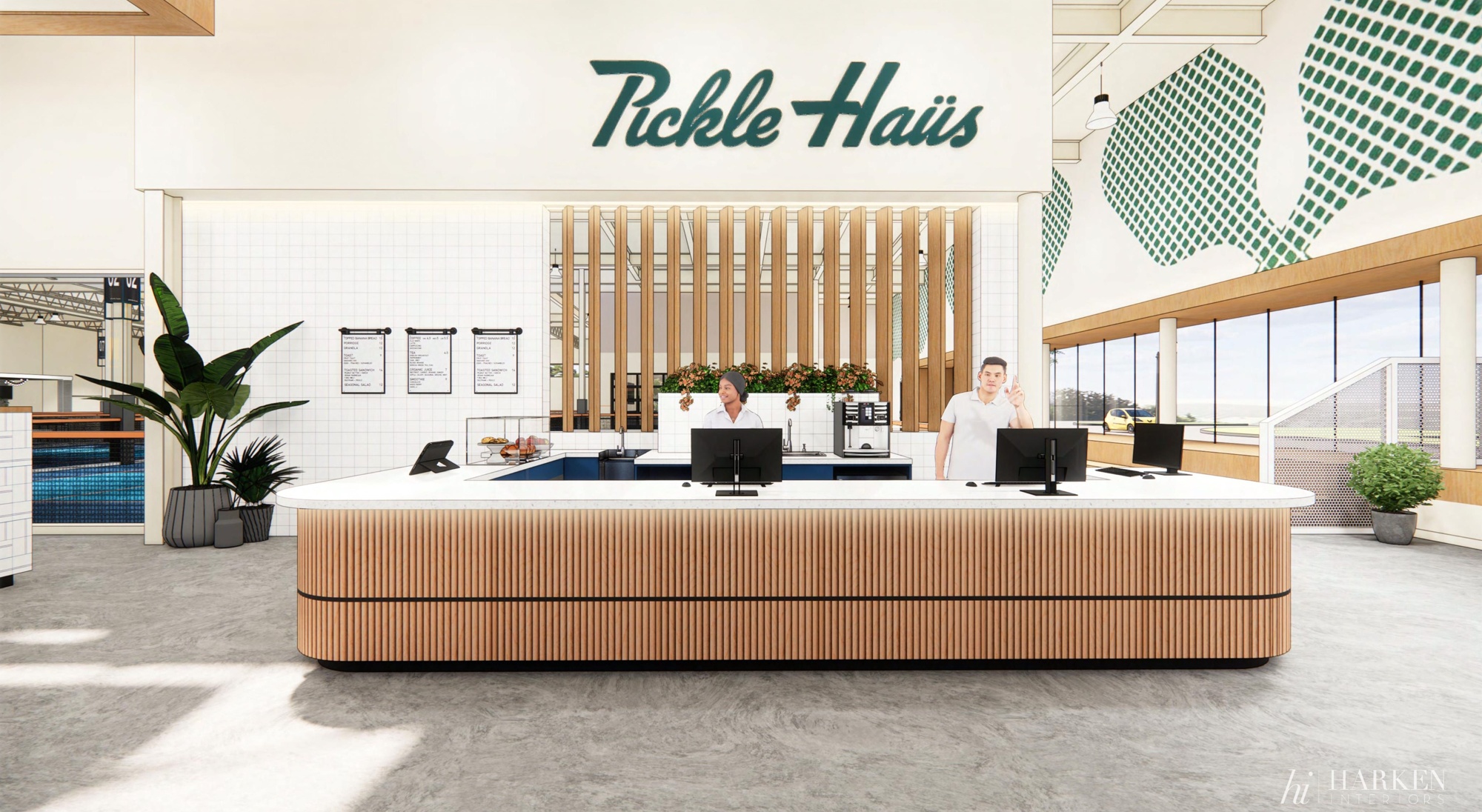
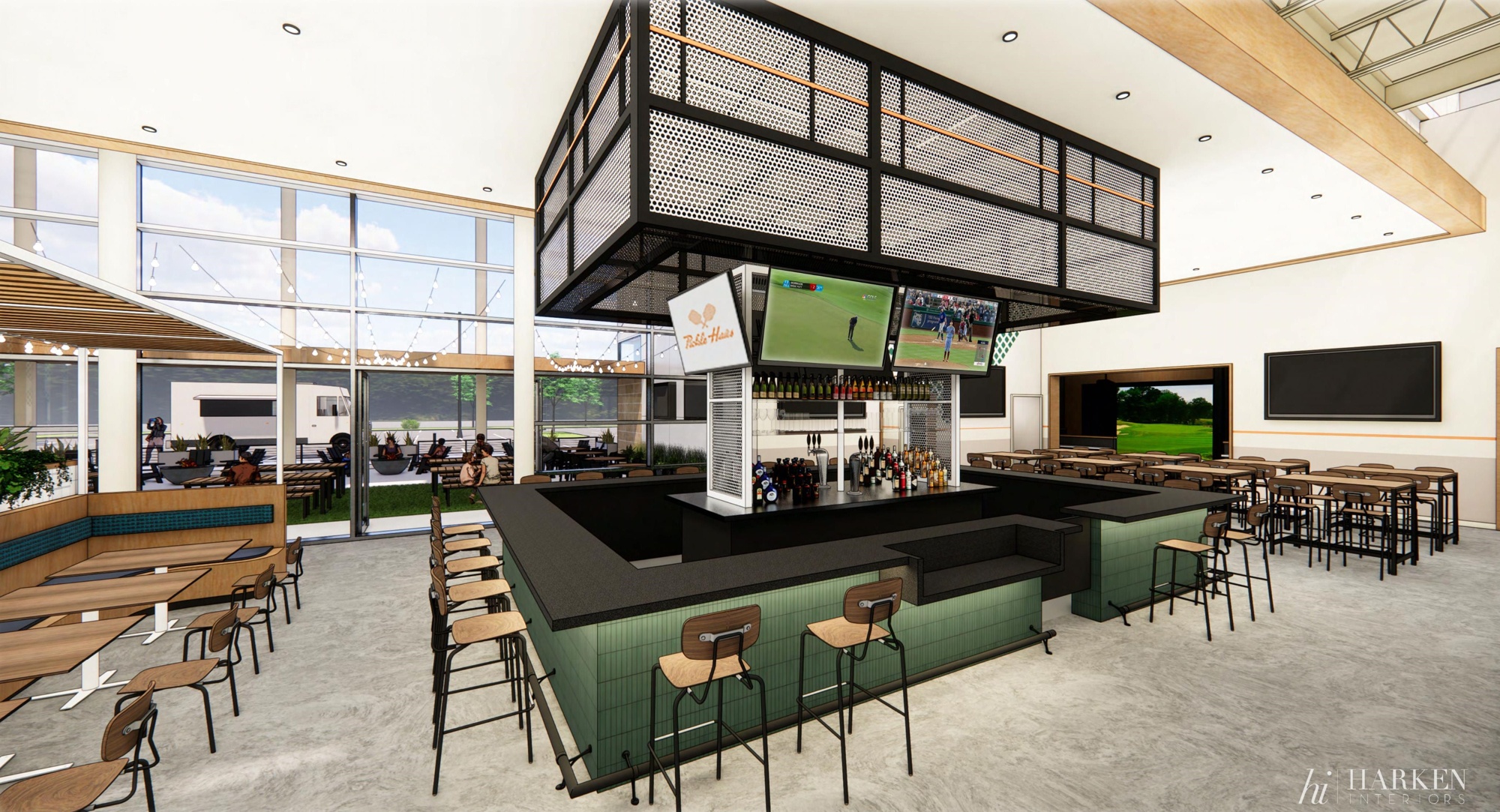
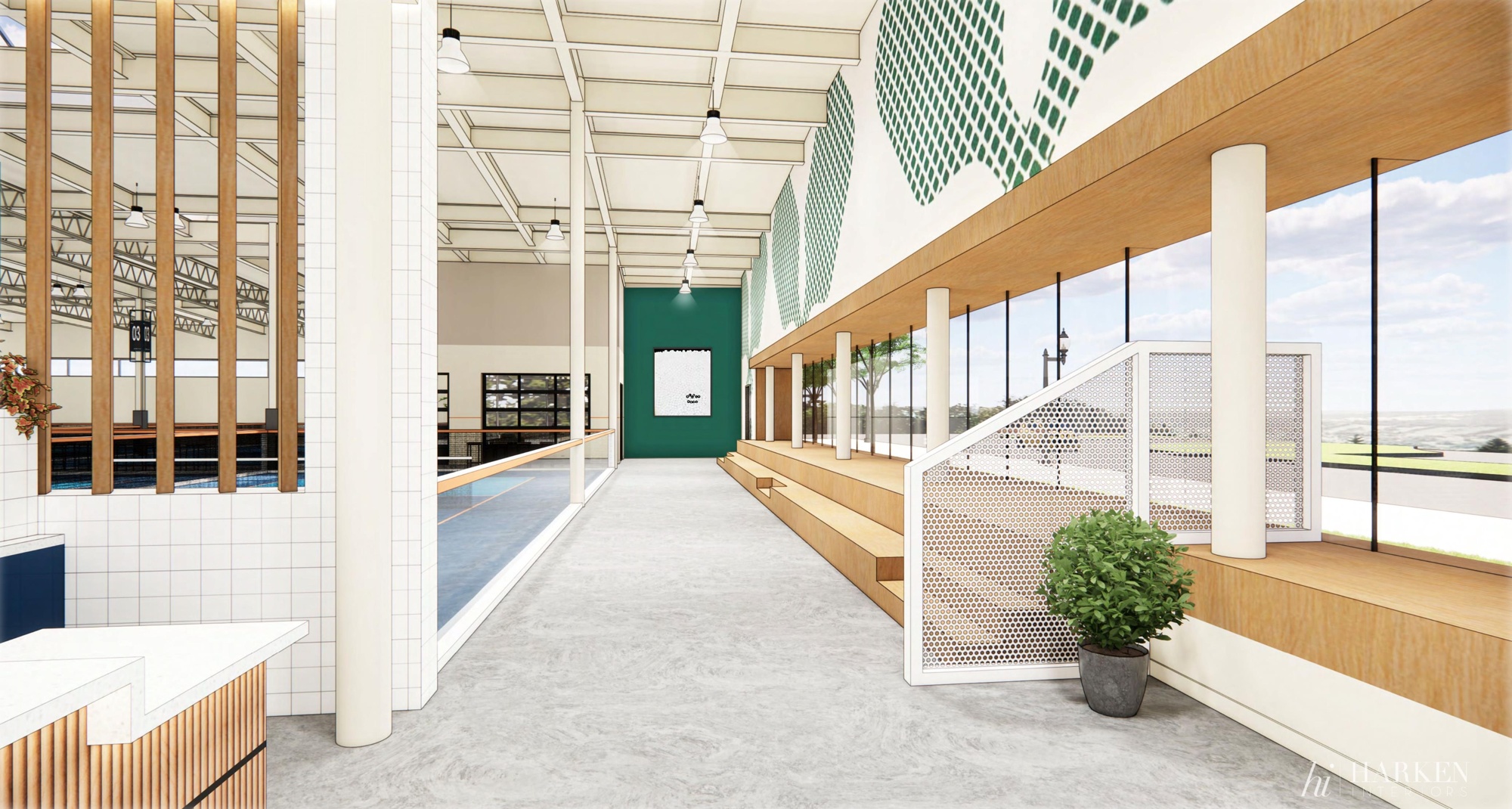
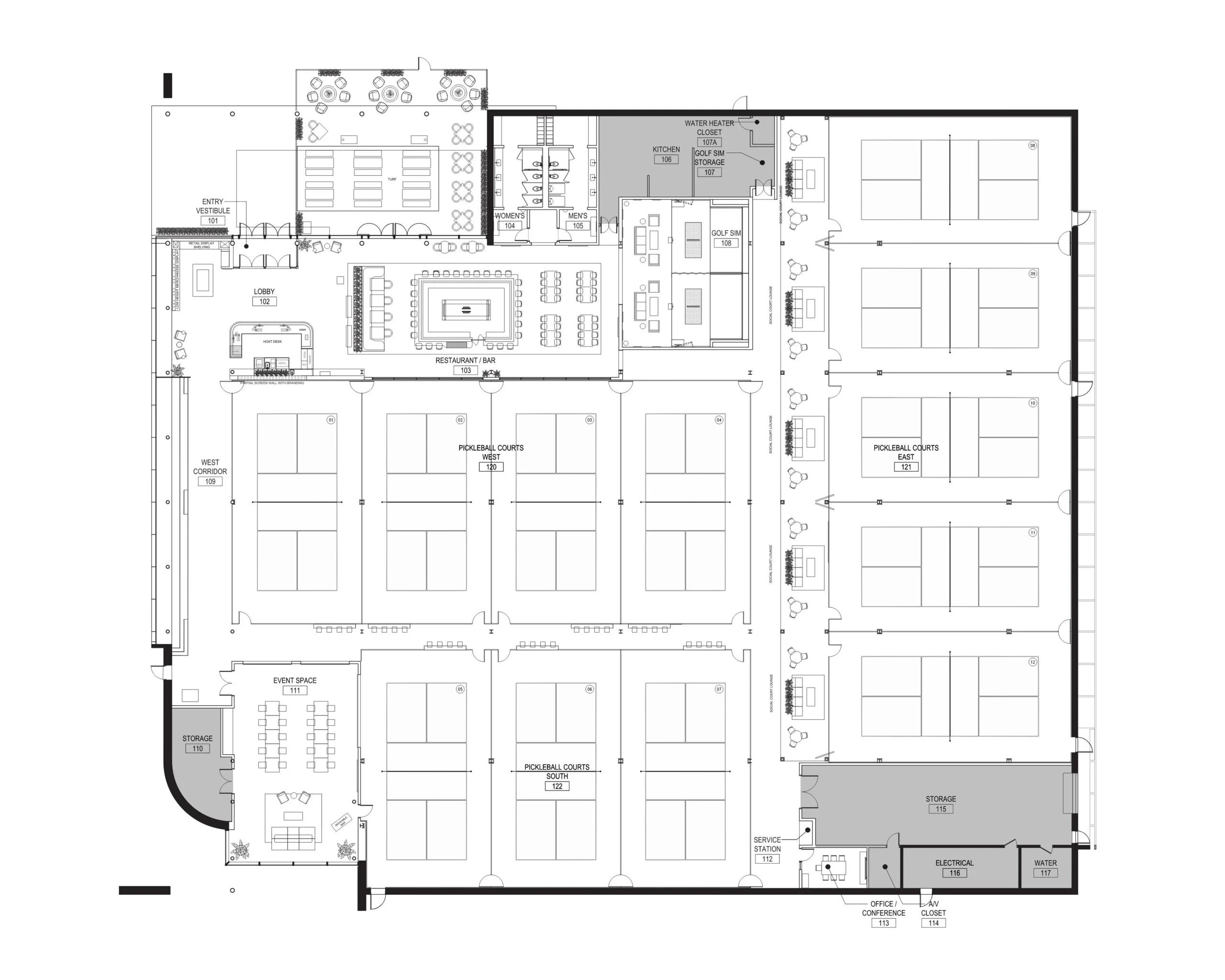
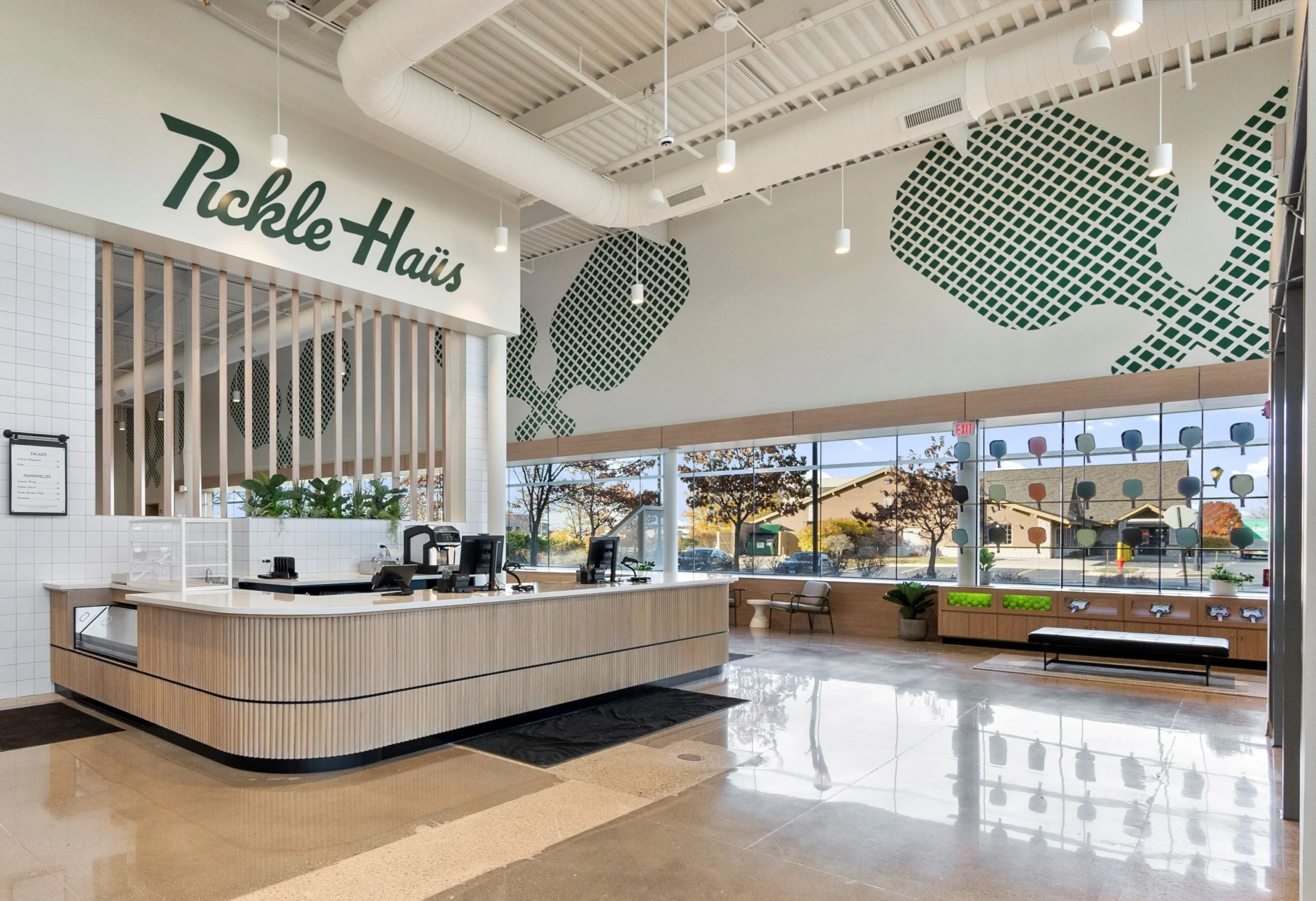
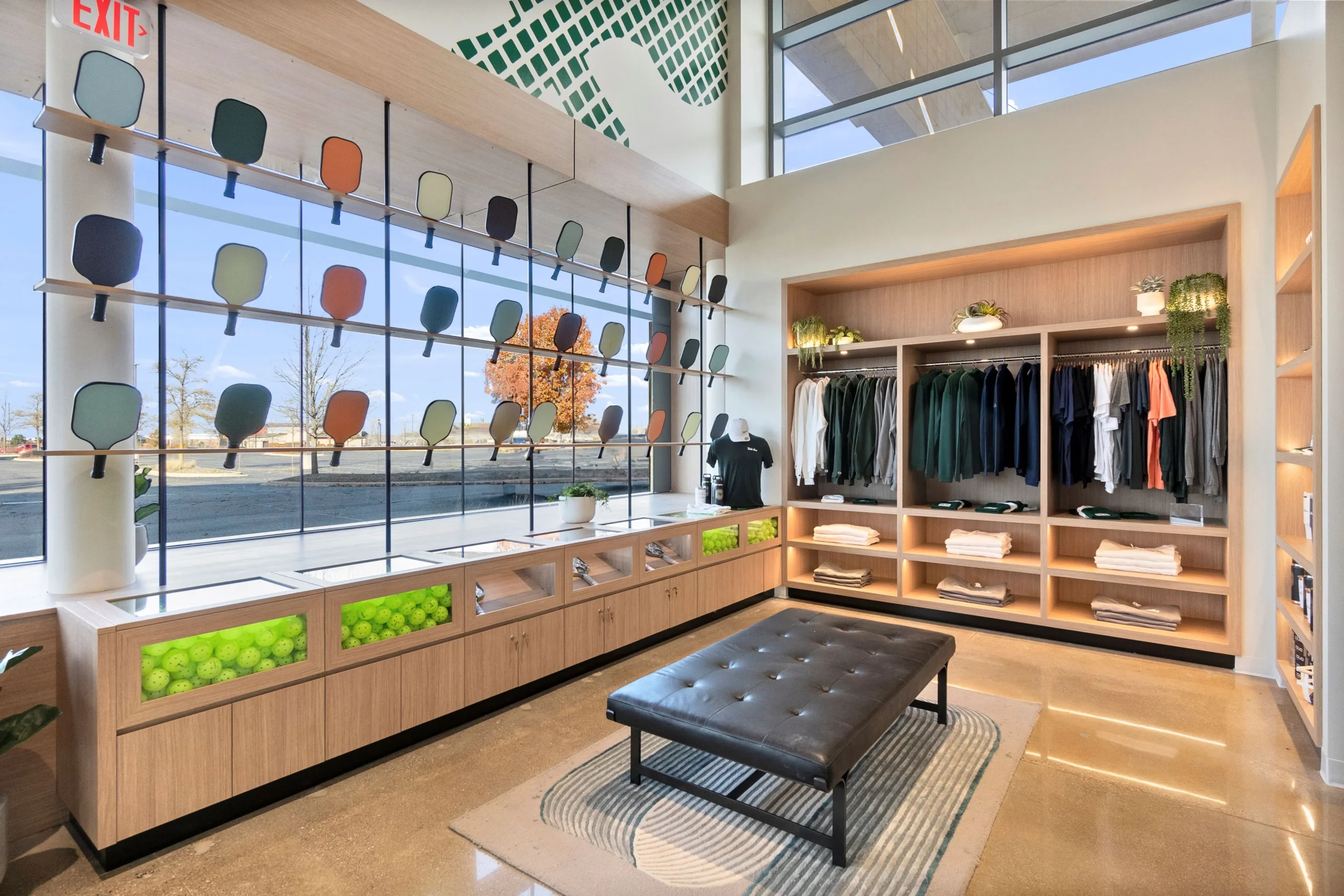
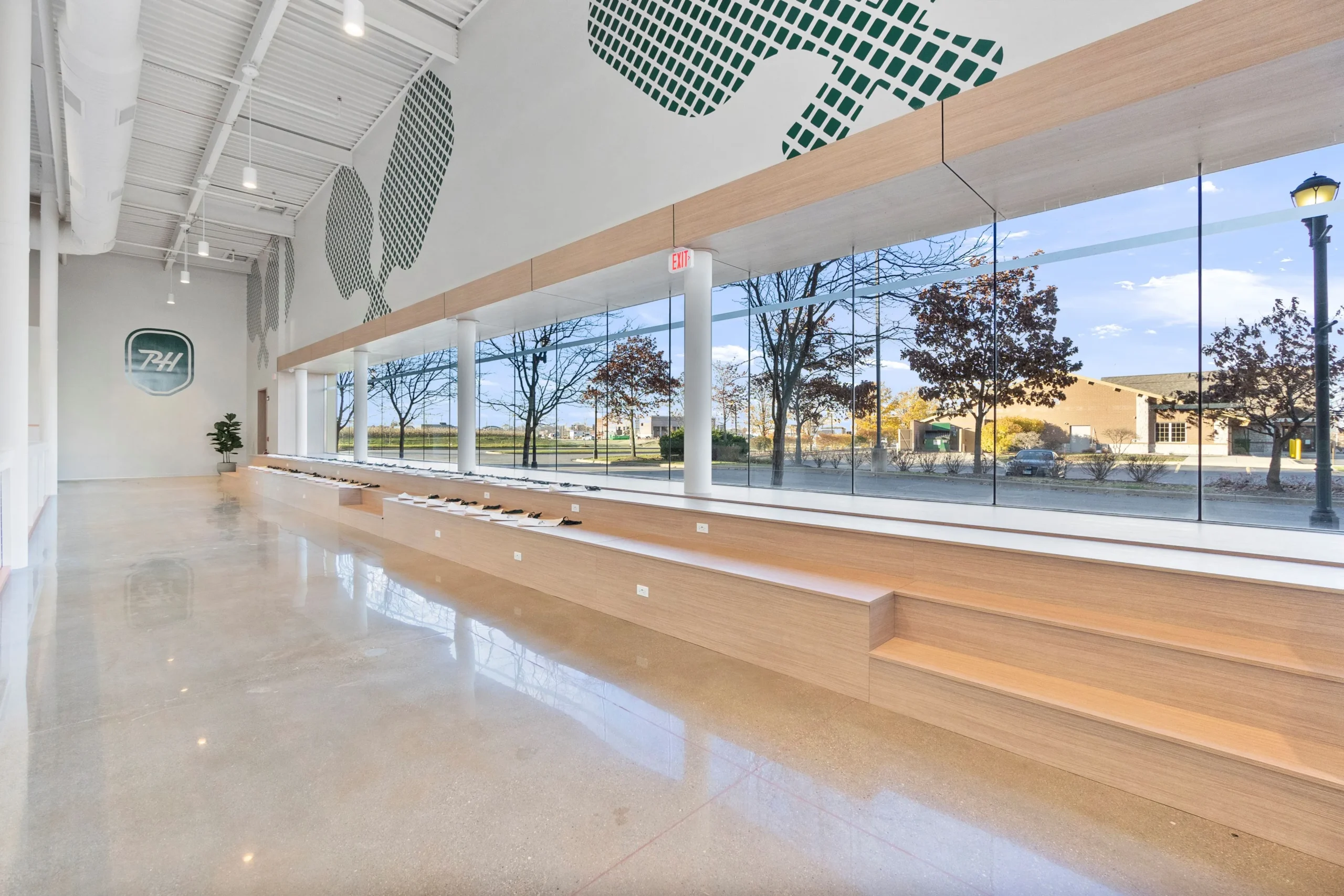
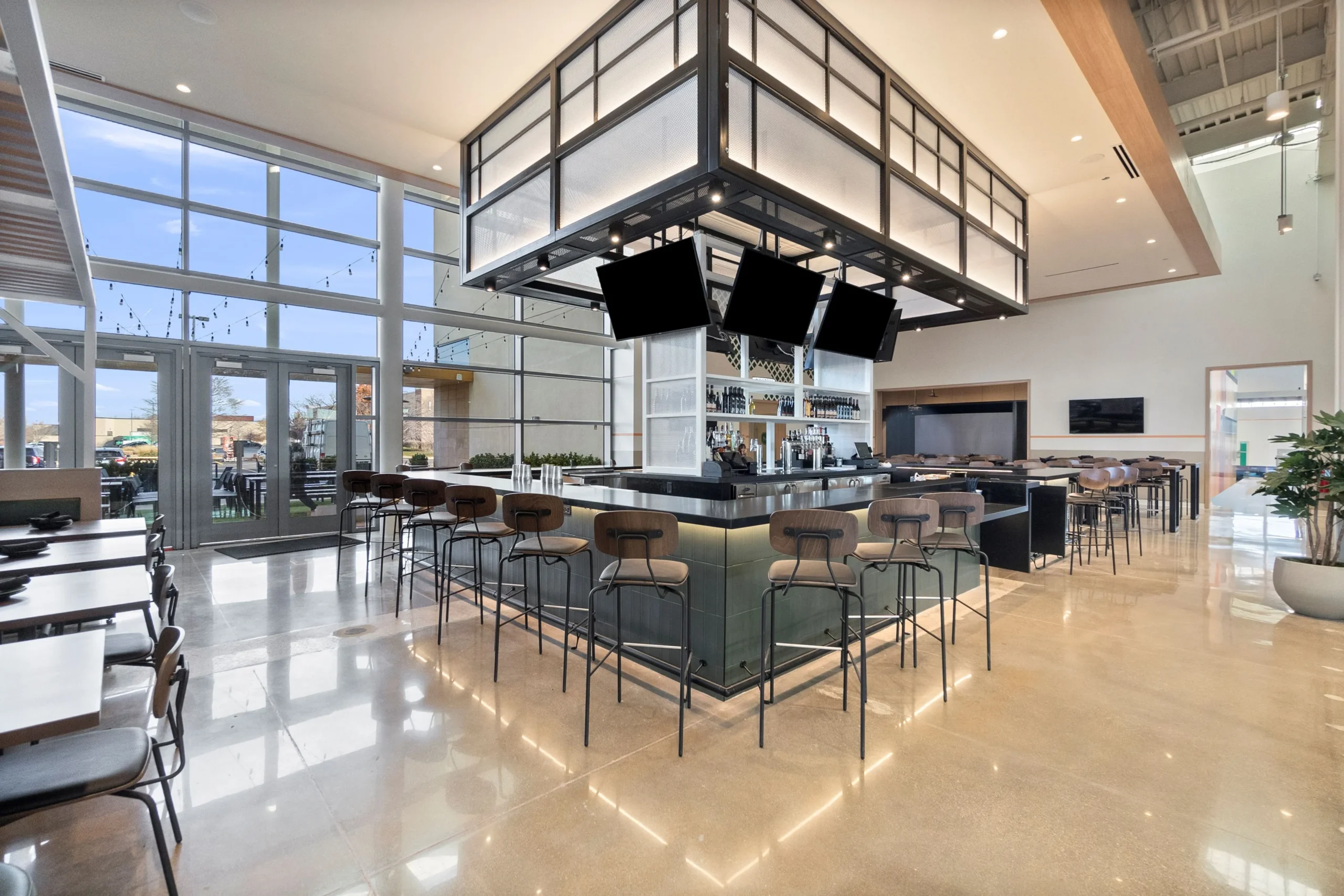
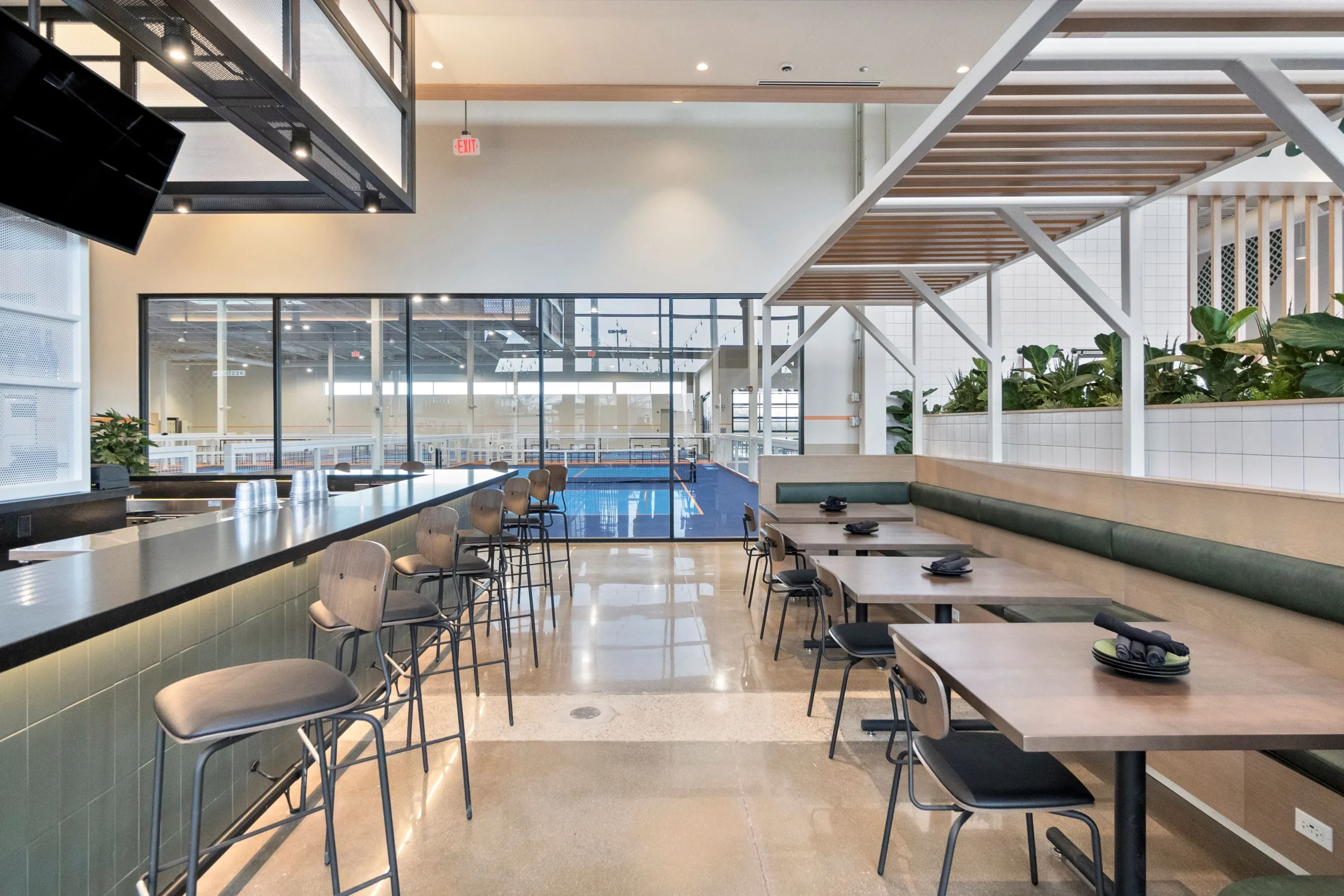
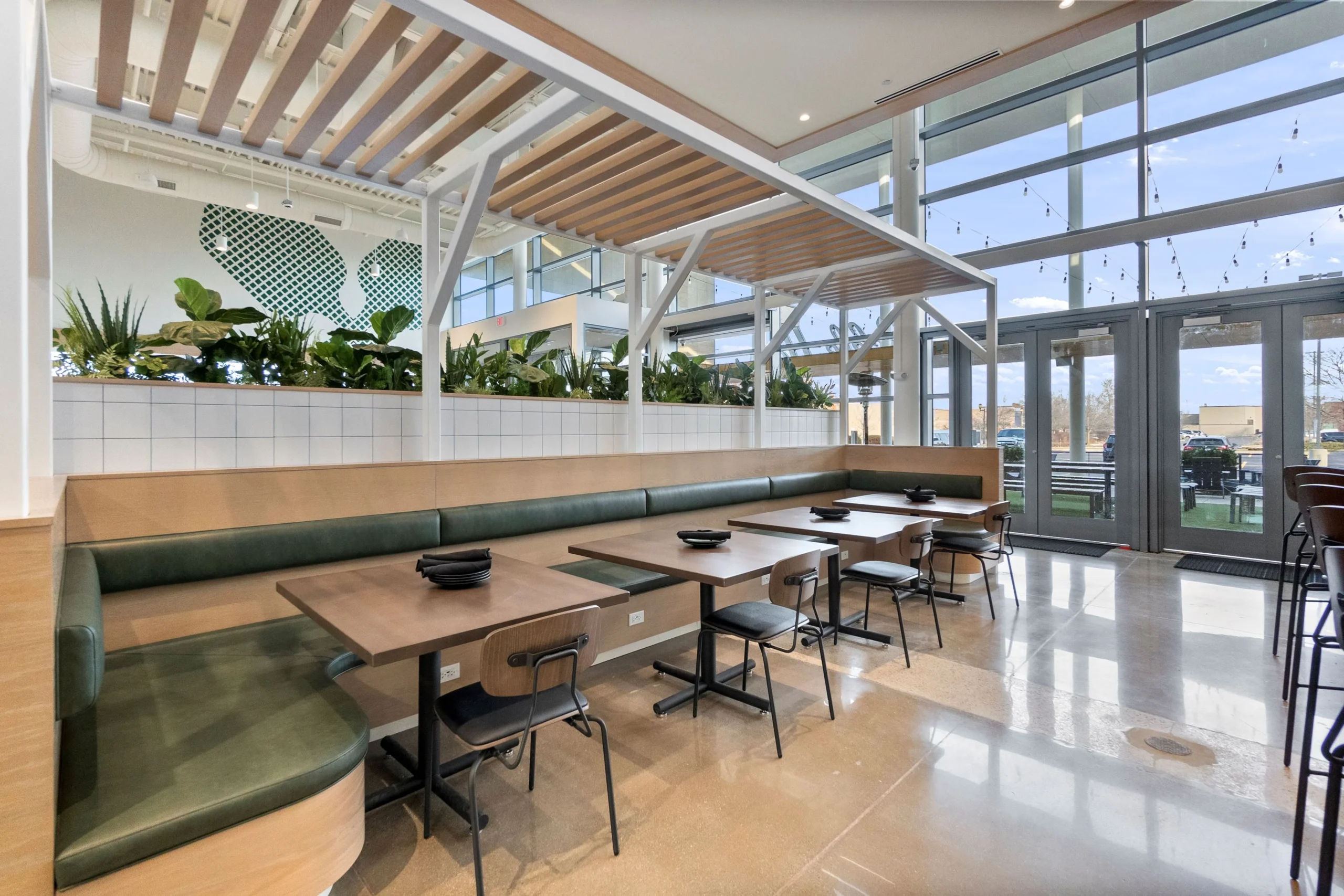
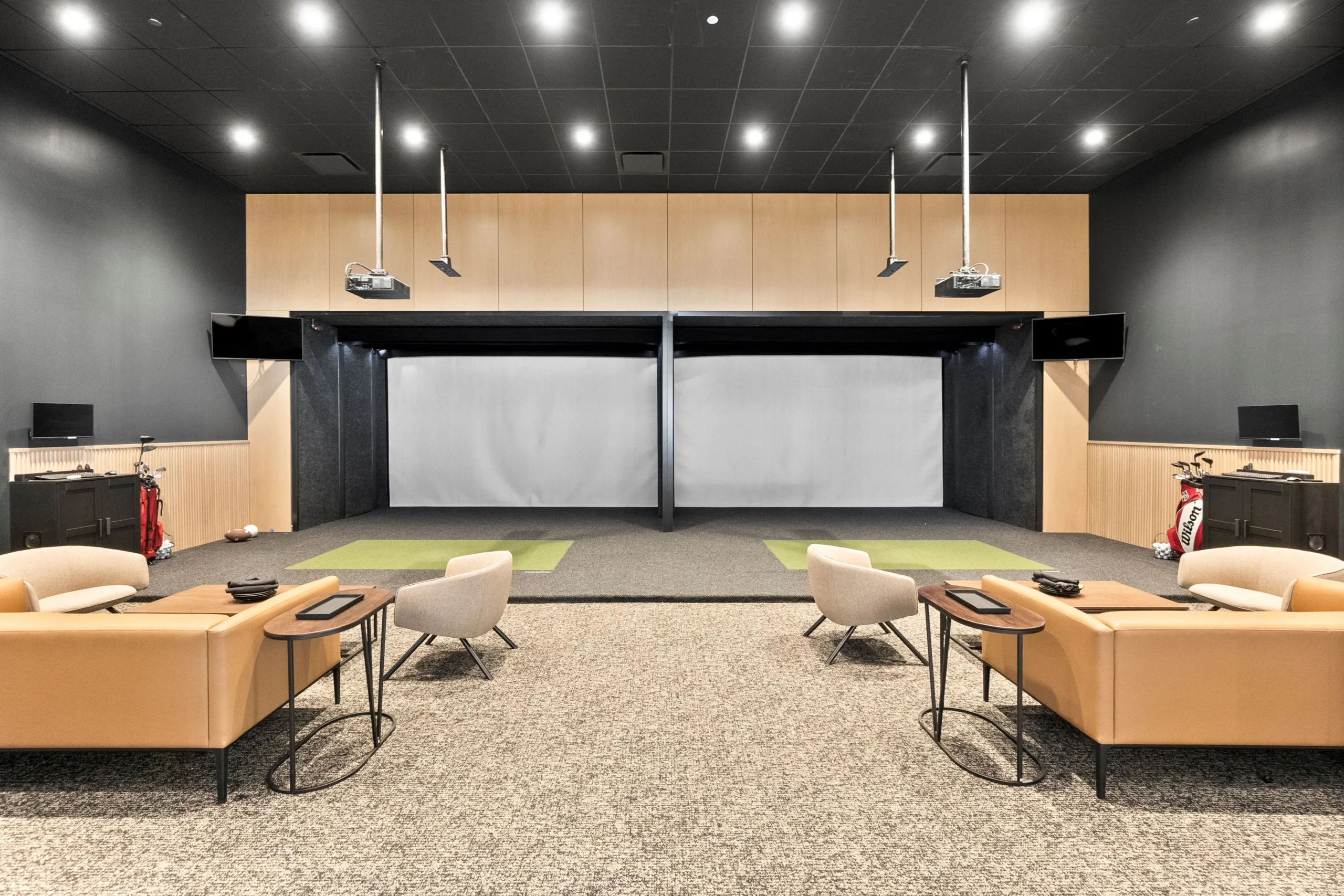
The main entrance, under the cantilevered roof, was reused with the exterior space repurposed as an outdoor gathering and event zone that included picnic tables, fire pits, informal seating and outdoor games. Once inside the building, a custom designed reception desk fronts an opening with wood slats allowing filtered views to the pickleball courts beyond. An adjacent small retail shop leads to a walkway to the private events area along an expanse of horizontal projecting windows which were repurposed as informal bleachers for those wanting to watch a match or just sit and talk. The restaurant / bar was located to the left, taking advantage of a large expanse of curtain wall. The bar was centrally located with a floating ceiling and steel framed structural accents. Steel trellises were used to reduce the scale of the space at the seating booths and define the restaurant’s space. Adjacent to the bar, a golf simulator studio was provided, accessed through a portal, providing a more intimate, quieter space.
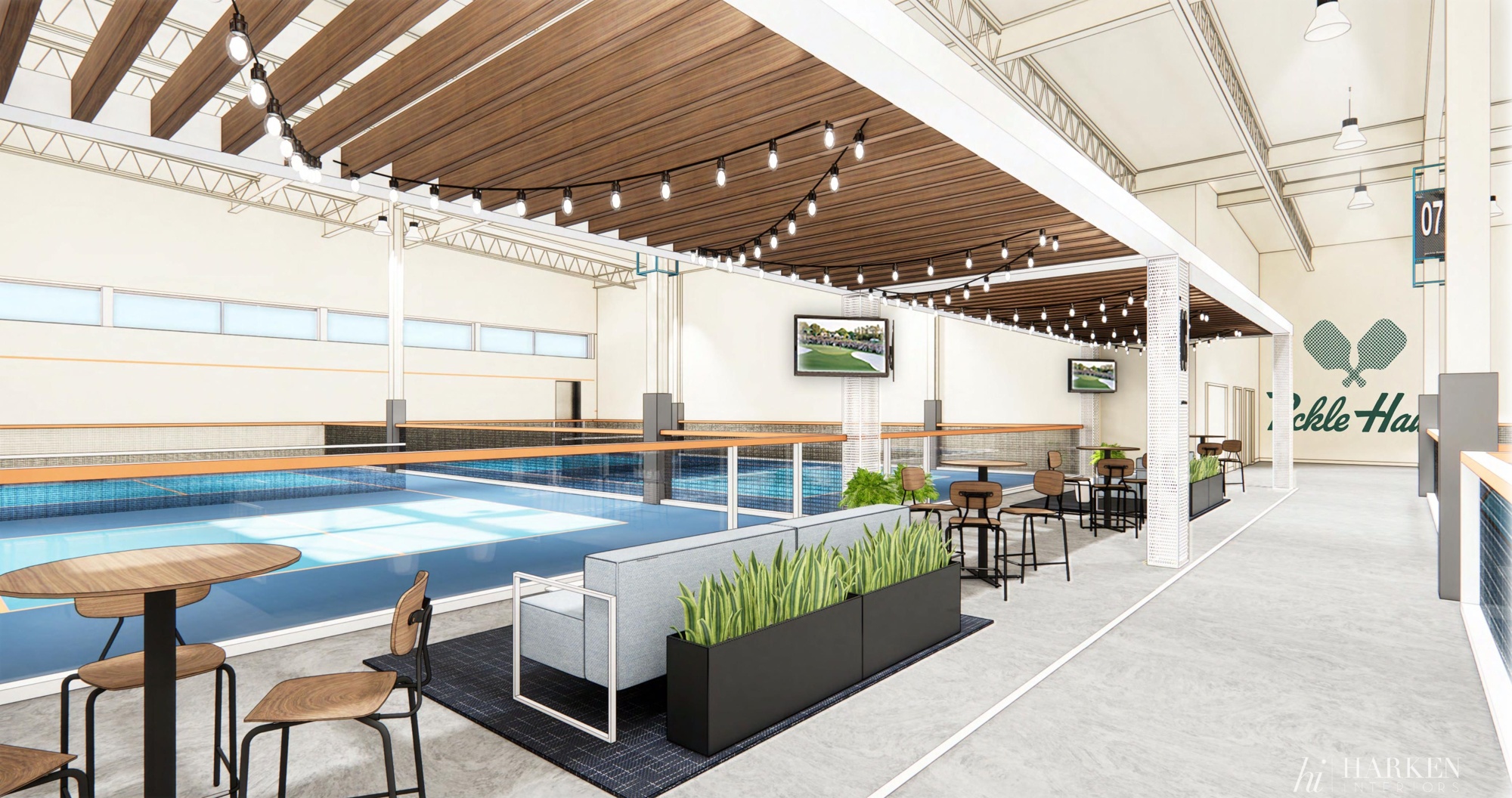
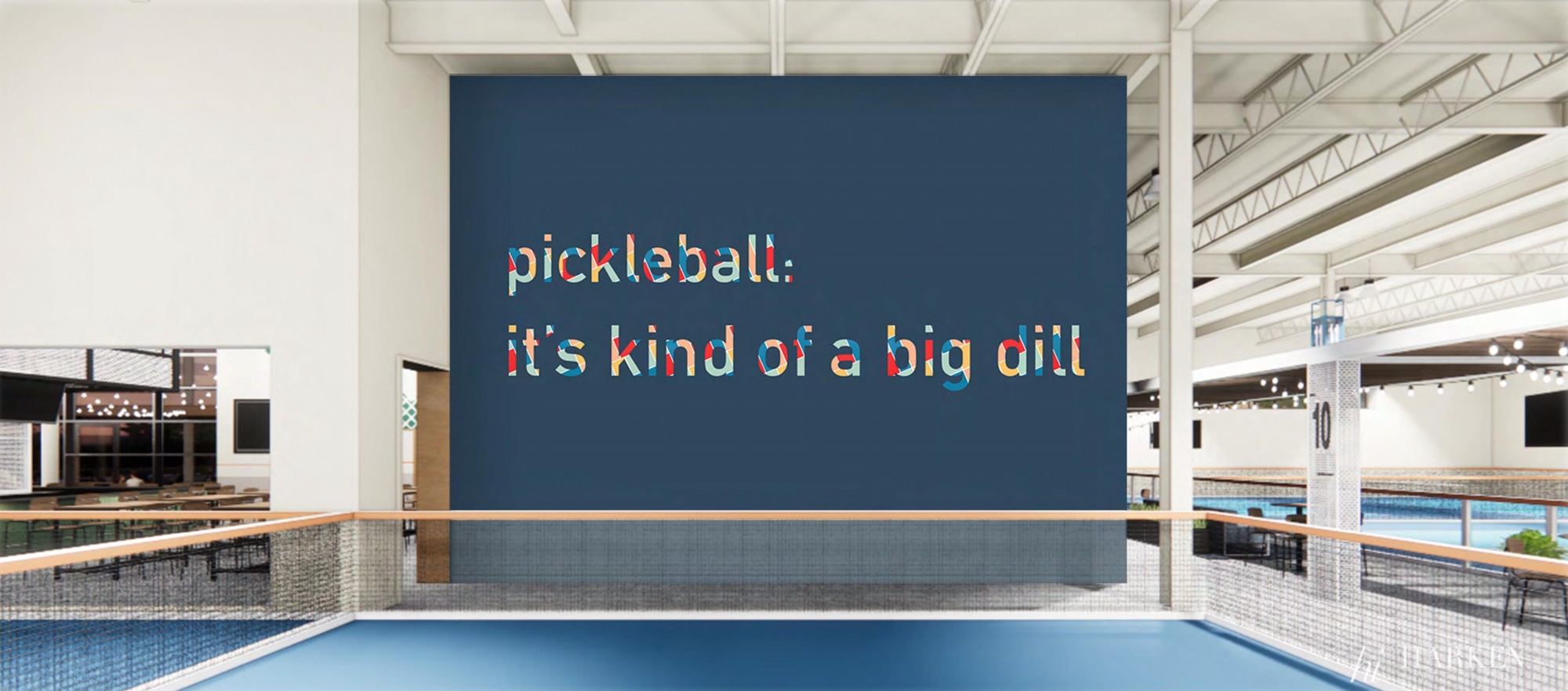
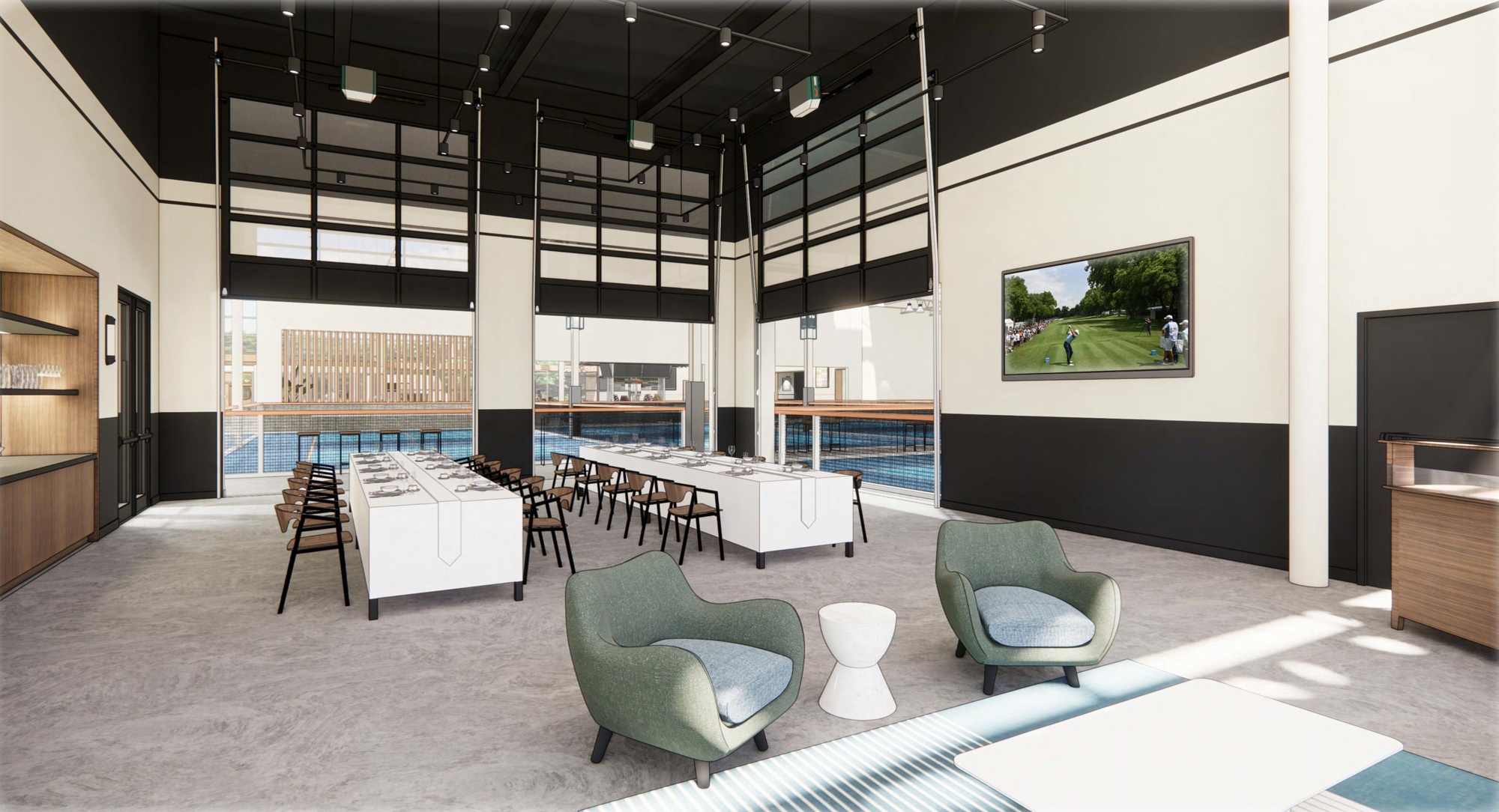
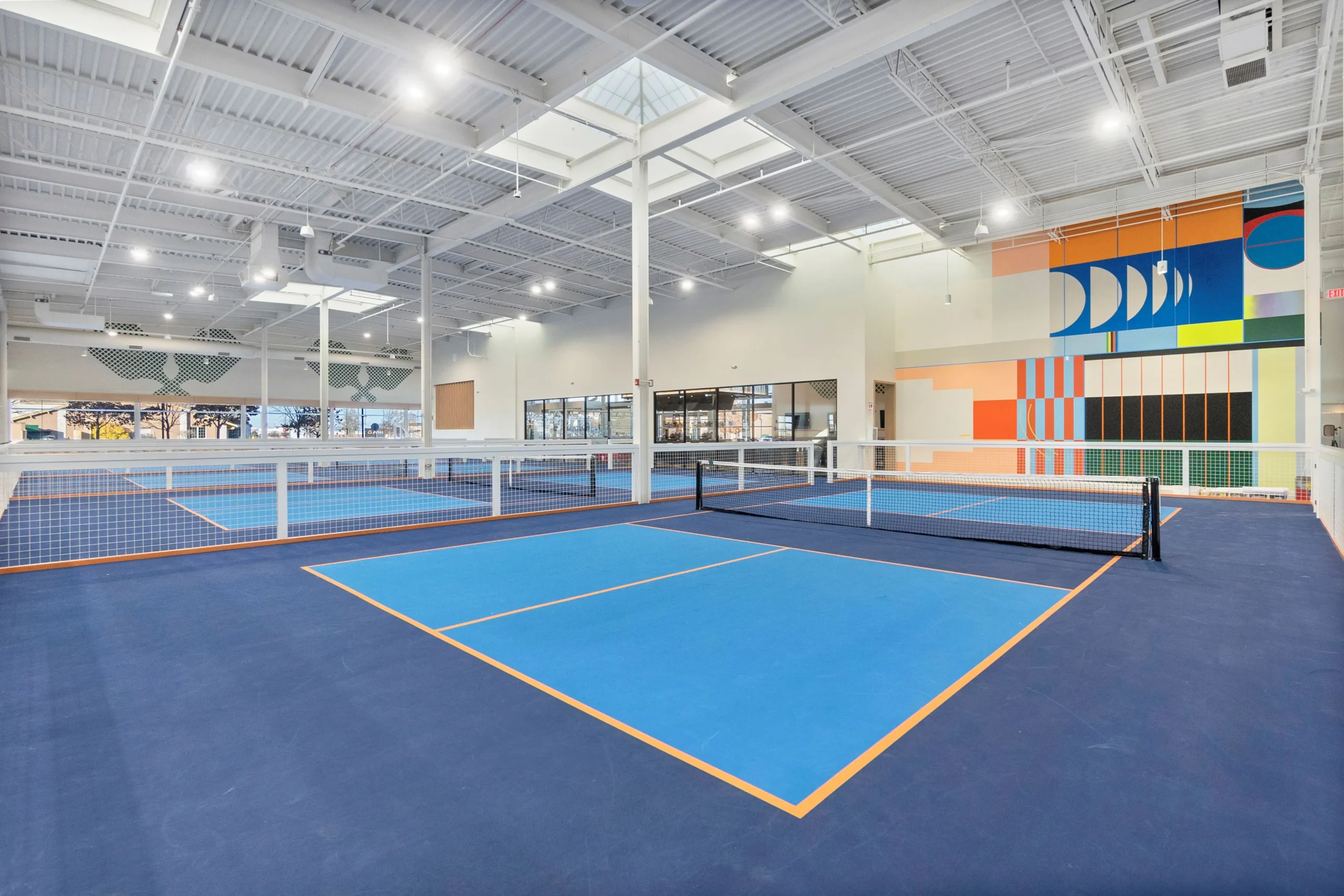
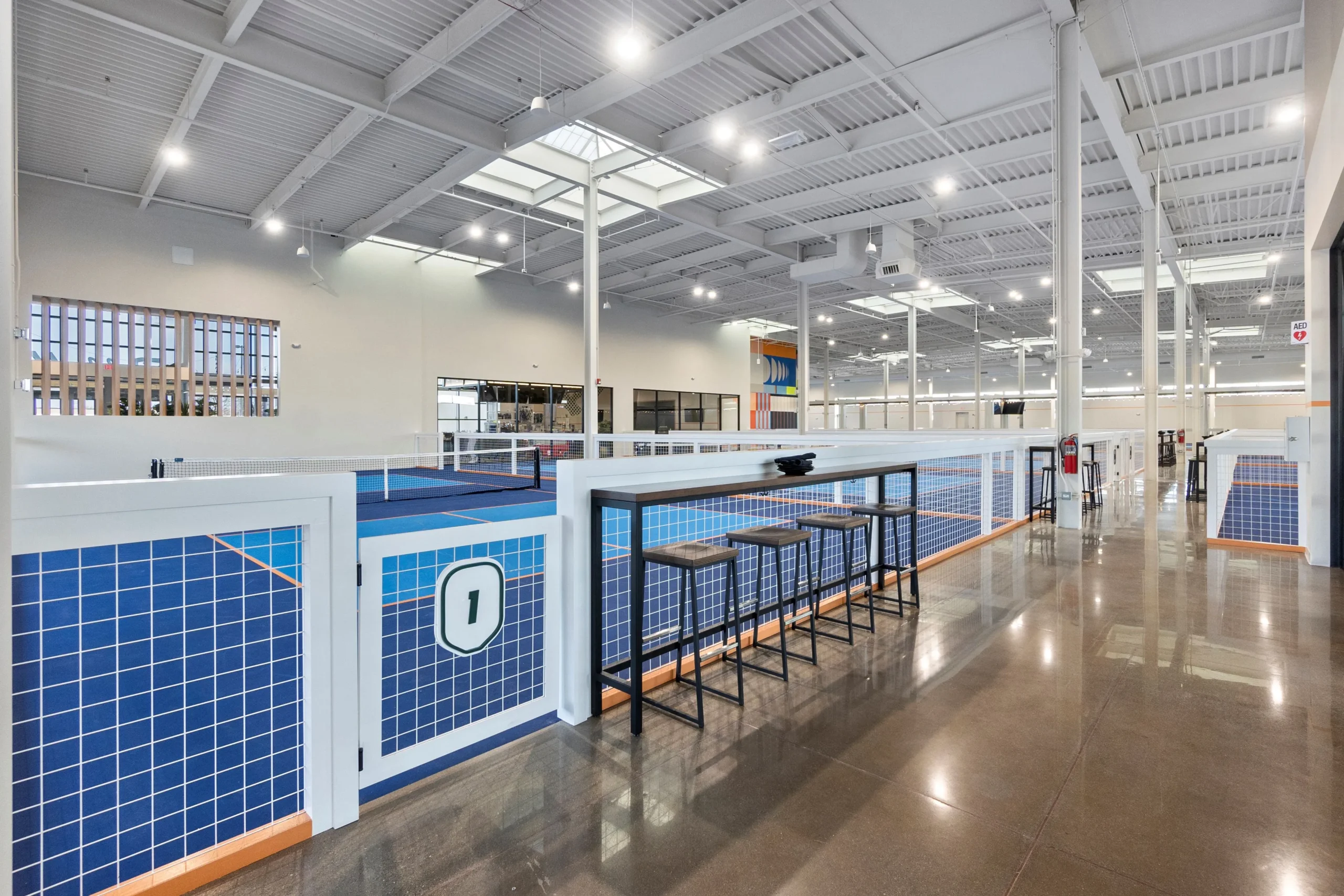
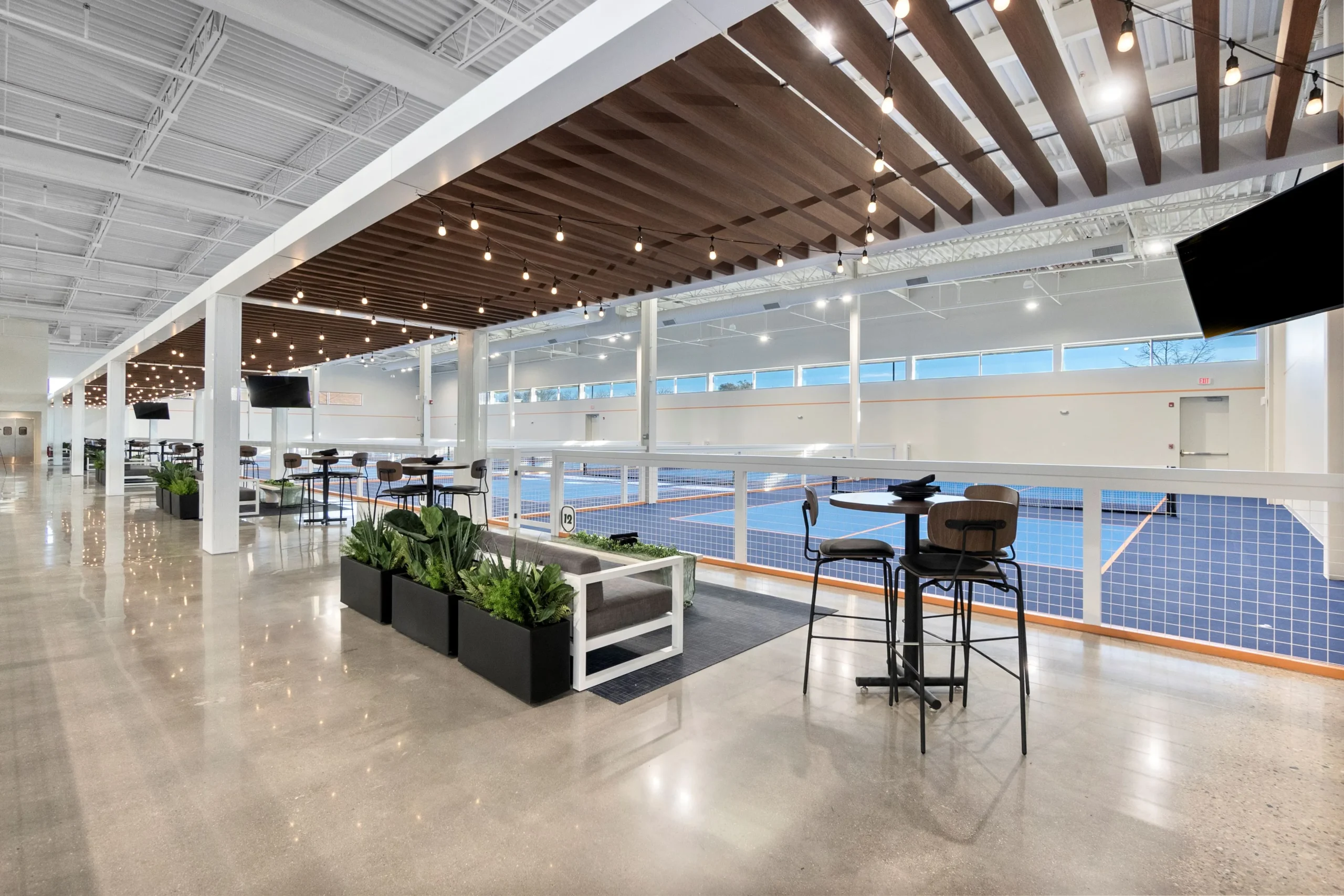
The Pickleball courts themselves, which take up most of the plan, were organized to allow for individual play, team play, tournaments and corporate events. A series of steel-framed trellis structures with wood slats and string light accents define the courts, lower the perceived ceiling height, and provide a more intimate space for gatherings, couches, tables and chairs. The event space utilizes garage doors to cater to private events or to open it up to the courts. Large scale graphics, bold colors, strategically placed openings, skylights and lighting, work together to allow all the disparate functions to operate on their own while giving the entire facility a unified design aesthetic.